Choosing the right fabric can make a major difference in how comfortable, practical, and attractive an outfit feels. For children, fabric selection matters even more because they are usually more active and may spend long hours wearing traditional clothes. The ideal material should feel soft against the skin, allow movement, handle the local weather, and remain easy to maintain. 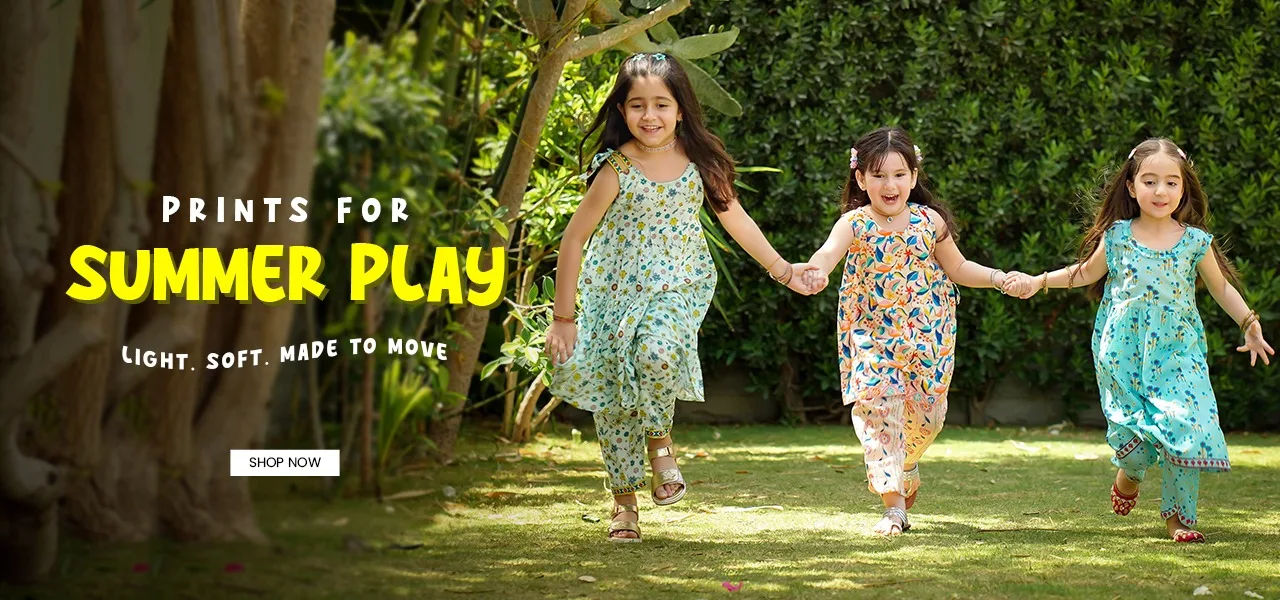 When selecting girls eastern wear, parents often focus first on color, embroidery, prints, and overall design.
Those details certainly matter, but fabric is just as important. A beautiful outfit made from an uncomfortable or unsuitable material may end up sitting unused in the wardrobe.
The best fabric depends on the season, occasion, age of the child, and style of the outfit. Cotton, lawn, linen, khaddar, chiffon, silk, velvet, and blended fabrics can all work well in different situations. The key is knowing when each material makes sense.
Why Fabric Matters in Girls' Eastern Clothing
Children generally need clothing that allows them to move freely. Traditional outfits can include long shirts, trousers, shalwars, dupattas, frocks, and layered designs. If the fabric is too stiff, heavy, rough, or restrictive, the outfit can become uncomfortable quickly.
Fabric also affects how an outfit hangs on the body. Lightweight materials create a softer and more relaxed appearance, while structured fabrics can give traditional dresses a more formal shape.
Another important factor is temperature. A fabric that works beautifully for a winter wedding may be completely unsuitable for a hot summer afternoon.
For everyday girls eastern wear, comfort should usually be one of the main considerations. For special occasions, appearance and decorative details may become more important, but comfort should not be ignored.
Cotton Is One of the Best Everyday Choices
Cotton is one of the most practical fabrics for children's traditional clothing. It is breathable, relatively easy to wash, and comfortable for everyday use.
Cotton allows air to circulate, which makes it particularly useful in warm weather. Children can also move around comfortably without feeling weighed down by their clothing.
Plain cotton can be used for simple kameez shalwar outfits, frocks, kurtas, and trousers. Printed cotton can create attractive casual outfits without requiring extensive decoration.
Another advantage is versatility. Cotton can be dyed in almost any color and printed with floral, geometric, traditional, or playful patterns.
When to Choose Cotton
Cotton works particularly well for:
-
School events involving traditional dress
-
Family gatherings
-
Everyday wear
-
Casual lunches and outings
-
Summer festivals
-
Play-friendly traditional outfits
For younger children, soft cotton is especially useful because rough or heavily treated fabrics can cause irritation.
Lawn Is Ideal for Hot Weather
Lawn is another popular choice for warm-weather clothing. It is lightweight, breathable, and comfortable when temperatures rise.
Because lawn is relatively light, it works particularly well for summer kameez, trousers, and coordinated outfits. Printed lawn can also create a polished appearance without requiring heavy embellishment.
Parents should pay attention to the quality of lawn, however. Very thin material may require lining, particularly when used for shirts or lighter-colored garments.
For summer girls eastern wear, lawn can provide a good balance between style and comfort. It is especially suitable when the outfit needs to look neat while still allowing the child to remain active.
Lawn for Festive Summer Outfits
Lawn does not have to look ordinary. Embroidery, printed borders, lace, small embellishments, and decorative necklines can turn a simple lawn outfit into something suitable for Eid or a family celebration.
The important point is to avoid excessive decoration on children's clothing. Heavy embellishment can make a lightweight outfit less comfortable and more difficult to maintain.
Linen Offers Comfort With a More Structured Look
Linen is known for its breathable quality and natural texture. It can be a good choice for children who need an outfit that looks slightly more structured than ordinary cotton.
Linen can work well for kurtas, shirts, trousers, and coordinated sets. It is particularly attractive for understated traditional designs.
One characteristic of linen is that it wrinkles more easily than some synthetic fabrics. For some parents, that is a drawback. For others, the relaxed texture is part of its appeal.
A linen-blend fabric can provide a useful middle ground. It may retain some of linen's breathable character while reducing excessive wrinkling.
Khaddar Is a Strong Winter Option
When temperatures drop, lightweight summer fabrics may no longer provide enough warmth. Khaddar can be a practical winter choice because it has a thicker and warmer texture.
It works particularly well for winter kameez, trousers, shawls, and traditional two-piece or three-piece outfits.
Khaddar can also support beautiful prints and darker seasonal colors. Deep green, maroon, navy, brown, mustard, and other winter shades can look especially attractive.
For young children, it is worth checking the inside texture before buying. Some heavier fabrics can feel rough against sensitive skin.
Velvet Works Best for Formal Winter Clothing
Velvet has a rich appearance and is strongly associated with formal winter clothing. It can be used for party dresses, frocks, waistcoats, jackets, and heavily decorated traditional outfits.
Its biggest advantage is visual impact. Even a relatively simple velvet outfit can look formal because the fabric itself has depth and texture.
However, velvet can be heavy and warm. It may not be suitable for children who will be running around indoors at a heated event.
For formal girls eastern wear during winter weddings and evening celebrations, velvet can be a stylish option. It is generally better suited to special occasions than everyday clothing.
Using Velvet Without Making an Outfit Too Heavy
Velvet does not have to cover the entire outfit. It can be used for sleeves, borders, waistcoats, panels, or a jacket while keeping the main shirt lighter.
This approach can create a formal appearance without making the complete outfit unnecessarily heavy.
Chiffon Is Better for Decorative Elements
Chiffon is lightweight and has a flowing appearance. It is commonly used for dupattas, overlays, sleeves, and decorative layers.
For children, chiffon is usually more useful as a secondary fabric than as the main material of an entire outfit.
A chiffon dupatta can add movement and elegance to a traditional dress. However, parents should consider whether the child can manage the dupatta comfortably.
For younger girls, a shorter or simpler decorative layer may be more practical than a long, complicated dupatta.
Silk Creates a Traditional Formal Appearance
Silk and silk-blend fabrics can create an elegant appearance for weddings, Eid gatherings, and other formal occasions.
Silk has a smooth surface and natural sheen, making it visually different from everyday cotton and lawn.
Pure silk can be expensive and may require more careful maintenance. Silk blends can sometimes provide a more practical alternative for children's clothing.
The most important consideration is comfort. A fabric that looks luxurious but feels uncomfortable may not be worthwhile for a child who needs to wear it for several hours.
Blended Fabrics Can Be Practical
Fabric blends combine characteristics from different materials. Cotton blends, linen blends, and synthetic blends are commonly used in children's clothing.
A blend may be easier to wash, less prone to wrinkling, or more durable than a single natural fiber.
However, the exact composition matters. A fabric marketed simply as a "blend" can contain very different proportions of natural and synthetic fibers.
Parents should check the fabric label where possible rather than judging quality entirely by appearance.
Choosing Fabric According to the Season
Season should be one of the first considerations when selecting traditional clothing.
Summer
For hot weather, breathable and lightweight fabrics generally work best. Cotton and lawn are common choices, while lightweight linen can also be useful.
Loose silhouettes can improve comfort further because they allow more air movement around the body.
Winter
Winter clothing can use heavier fabrics such as khaddar and velvet. Wool blends may also be incorporated into winter accessories and layers.
The goal should be warmth without excessive weight.
Spring and Autumn
Moderate-weather seasons provide more flexibility. Cotton blends, linen, medium-weight fabrics, and layered outfits can all work well.
A lighter shirt combined with a cardigan, jacket, or waistcoat can also make an outfit more adaptable.
Fabric Should Match the Occasion
Everyday clothes do not need the same fabric as wedding clothing.
For daily wear, durability and easy washing are important. Cotton and practical blends can therefore be useful.
For Eid, family celebrations, and parties, parents may prefer embroidered lawn, silk blends, chiffon details, or other decorative materials.
Wedding clothing can include velvet, silk, brocade, jacquard, or embellished fabrics, depending on the season.
The best girls eastern wear is therefore not necessarily made from one universal fabric. The occasion changes what makes sense.
Consider the Child's Age
Age can influence fabric selection considerably.
Toddlers and very young children often benefit from soft, lightweight fabrics. Complicated layers, scratchy embroidery, and heavy decorations can interfere with movement.
Older girls may be comfortable with more structured outfits and decorative fabrics.
Teenagers can generally handle a wider variety of materials, although comfort remains important.
Parents should also consider how independently the child can manage buttons, ties, dupattas, and other clothing features.
Check the Fabric Before Buying
A fabric can look excellent in a photograph and feel completely different in person.
Whenever possible, touch the material before purchasing. Check whether it feels soft, stiff, rough, slippery, or excessively heavy.
Hold it up to the light to see how transparent it is. This is especially useful for lightweight fabrics such as lawn and chiffon.
It is also worth checking how easily the material wrinkles. Crush a small section gently in your hand and see how quickly it recovers.
For children's clothing, these small checks can prevent disappointing purchases.
Pay Attention to Embroidery and Embellishment
Sometimes the fabric itself is comfortable, but the decoration makes the outfit uncomfortable.
Heavy sequins can scratch the skin. Rough embroidery can cause irritation around the neckline or sleeves. Large beads may also make clothing heavier than necessary.
The placement of decoration matters too. Embroidery around the neck, cuffs, and waist should be checked carefully.
For younger girls, soft decorative techniques are usually more practical than dense embellishment.
Fabric Care Also Matters
Before buying an outfit, consider how it will be washed.
Children's clothing naturally faces more spills, stains, and frequent washing than many adult formal clothes.
Cotton and some blends are relatively easy to maintain. Velvet, silk, and heavily embellished fabrics may require more careful handling.
A beautiful outfit that requires complicated cleaning after every use may not be the most practical choice for regular wear.
Parents should follow the care instructions supplied with the garment. Washing temperature, drying method, ironing requirements, and storage can all affect how long the fabric remains attractive.
Comfort Should Come Before Appearance
A common mistake is choosing children's clothing entirely based on how it looks.
Pictures do not show whether a fabric feels scratchy or whether the outfit is too warm. They also do not show whether the child can comfortably sit, walk, run, or play.
For younger children especially, movement is important.
A slightly simpler outfit made from comfortable fabric can often be more useful than a highly decorated outfit that the child refuses to wear.
This does not mean style has to be sacrificed. It simply means fabric should be treated as part of the design rather than an afterthought.
A Simple Fabric Guide for Parents
There is no single fabric that wins for every situation. A practical way to think about the choices is to match the material with the purpose.
Cotton is excellent for comfortable everyday outfits.
Lawn is particularly useful for hot summer weather.
Linen works well when a breathable fabric with a more structured appearance is desired.
Khaddar is suitable for cooler weather.
Velvet is useful for formal winter occasions.
Chiffon works well for flowing decorative layers and dupattas.
Silk and silk blends are suitable for more formal traditional outfits.
Blended fabrics can be useful when durability, easy care, and comfort need to be balanced.
How to Build a Comfortable Traditional Outfit
Fabric should be considered together with the cut of the garment.
A breathable fabric will not necessarily feel comfortable if the clothing is extremely tight.
Likewise, a lightweight outfit can become uncomfortable if it contains too many layers.
For children, relaxed cuts, practical sleeves, comfortable waistbands, and manageable lengths can improve the overall experience.
The outfit should also match the child's normal activity. A dress intended for sitting at a wedding can be different from one intended for a family picnic or school celebration.
Good girls eastern wear combines these factors rather than relying on fabric alone.
Common Fabric Mistakes to Avoid
One mistake is buying very thin fabric without considering transparency. Another is choosing heavy material for a warm environment.
Some parents also overlook the effect of decorative elements. An outfit may have a soft base fabric but uncomfortable embroidery.
Another issue is buying an outfit that requires delicate care when the child will wear it frequently.
It is also important not to assume that an expensive fabric is automatically better. Price can reflect design, craftsmanship, branding, or embellishment rather than comfort.
The right fabric is the one that fits the specific purpose.
Conclusion
The best fabric for girls' eastern clothing depends on weather, occasion, age, comfort, design, and maintenance requirements. Cotton and lawn are excellent choices for many everyday and summer outfits, while linen can provide breathable structure. Khaddar and velvet are useful in colder weather, particularly when warmth and formal appearance are needed. Chiffon is better suited to flowing layers and decorative details, while silk and silk blends can create an elegant appearance for special occasions.
When shopping for girls eastern wear, parents should look beyond color and decoration. The fabric should feel comfortable, allow movement, and suit the conditions in which the child will actually wear the outfit.
For everyday clothing, practicality usually matters most. For weddings and celebrations, decorative fabrics can make sense, provided they do not create unnecessary weight or irritation.
Ultimately, the best choice is not simply the most luxurious or fashionable fabric. It is the material that allows the child to look appropriately dressed while still feeling comfortable throughout the day. When fabric, fit, season, and design are considered together, traditional clothing can be both beautiful and genuinely enjoyable to wear.